
Bathroom Planning6 min read
Planning a Bathroom Remodel for Homes with Limited Square Footage
Small bathrooms can feel dramatically better when layout, sightlines, and storage are solved before finishes are selected.
May 6, 2026Read More
$1,500 OFF Your Dream Kitchen or Bathroom + FREE 3D Design Layouts

A complete bathroom renovation is easier to evaluate when the process is broken into clear phases. From the first estimate conversation through the final walkthrough, each phase has a specific job that protects the quality of the finished room.
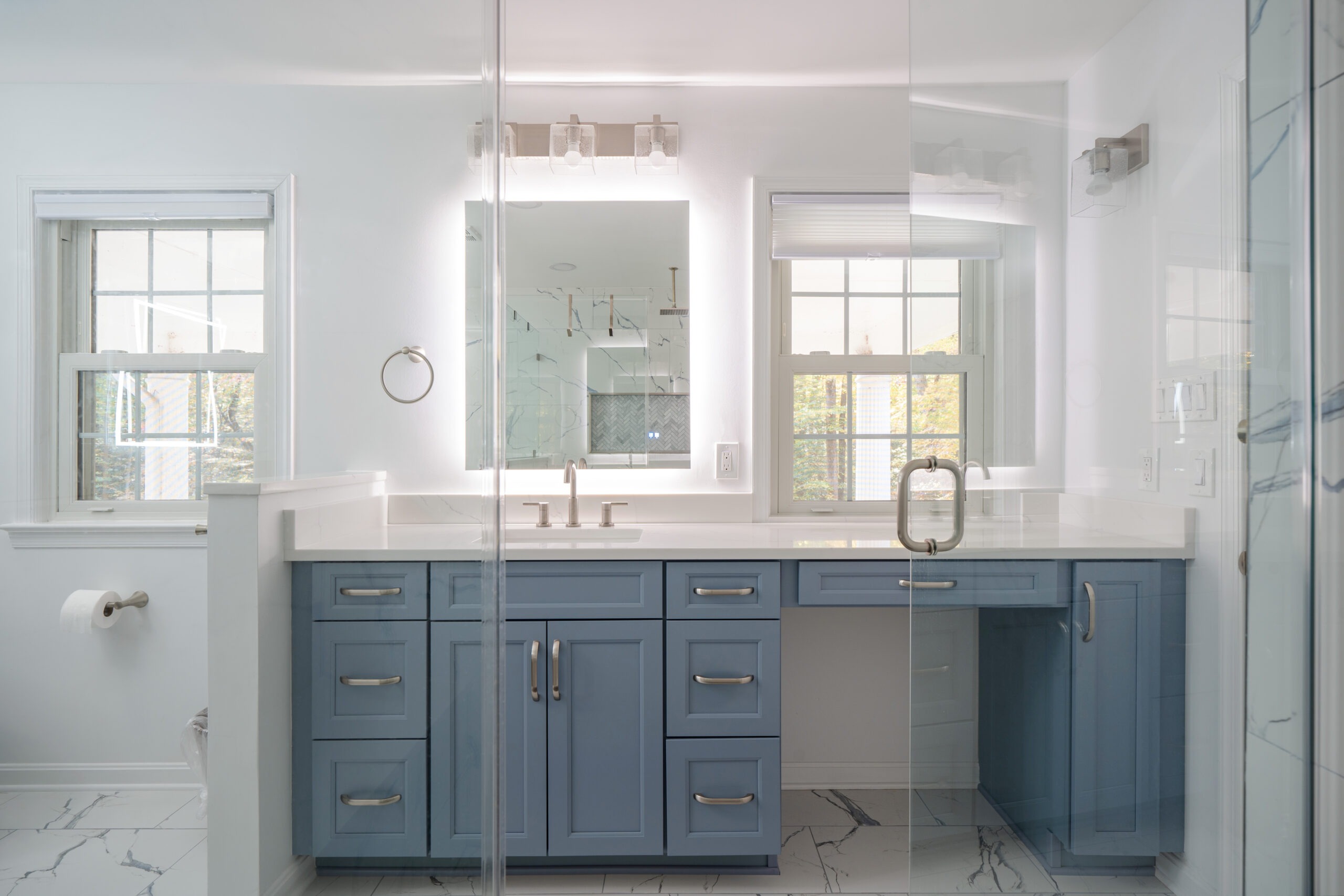
The project starts by clarifying what the room needs, what the homeowner wants to improve most, and whether plumbing, electrical, or layout work is likely to shape the budget. This stage protects the project from vague assumptions later.
It is also the stage where timing, budget range, and material expectations begin to take real form.
Tile, vanity style, shower glass, fixtures, and lighting all influence the construction sequence. The more clearly those decisions are resolved before demolition, the cleaner the field execution usually becomes.
Ordering discipline is especially important in bathrooms because one missing fixture or custom glass delay can hold up multiple later steps.
Once demo, rough-in, waterproofing, tile, cabinetry, and final fixtures are complete, the renovation still needs a strong closeout phase. That is where final adjustments, usage questions, and workmanship review come together.
A finished bathroom should feel ready to live with, not just ready to photograph.
Keep Reading
Small bathrooms can feel dramatically better when layout, sightlines, and storage are solved before finishes are selected.
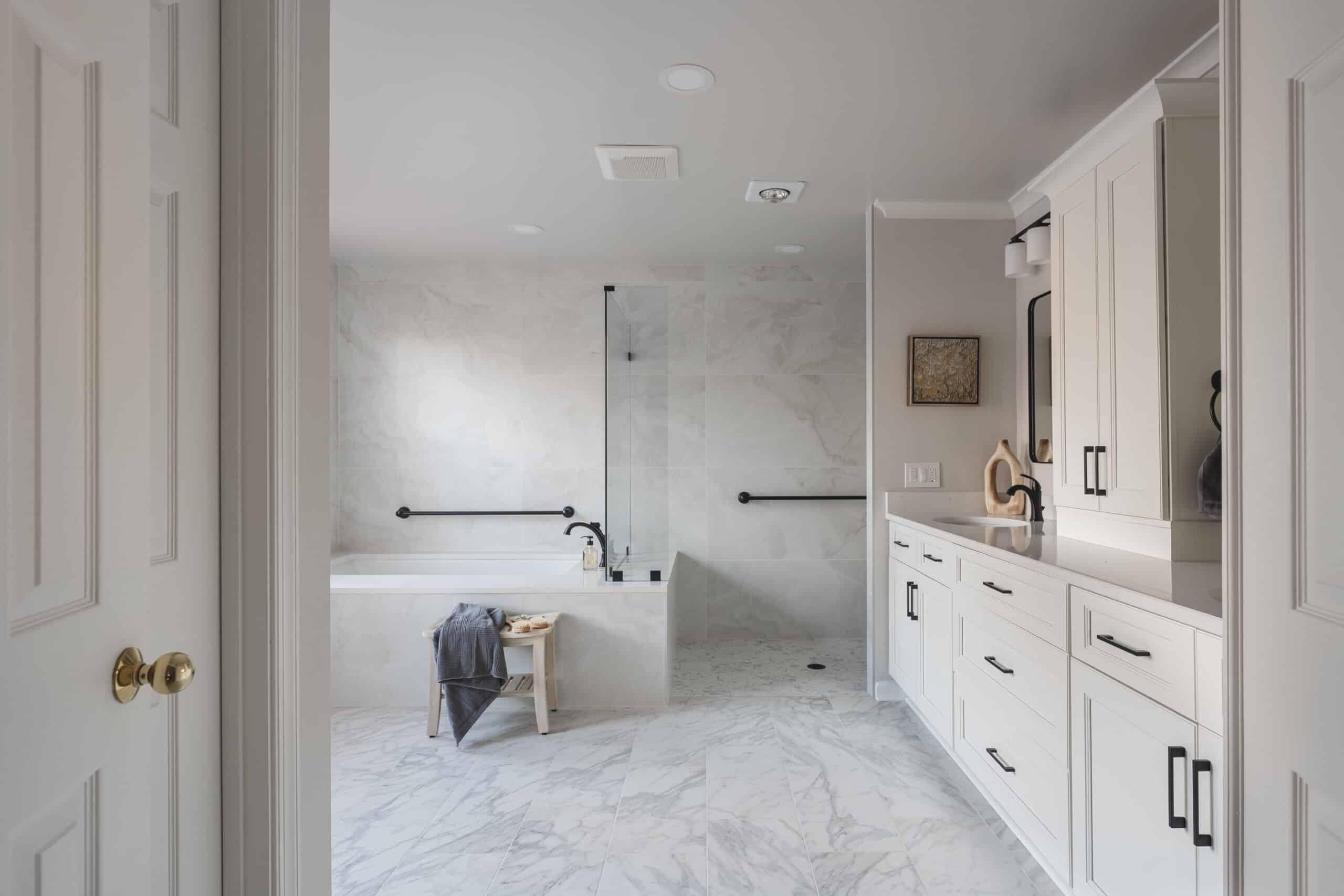
Comfort comes from lighting, hardware placement, and material warmth just as much as it does from adding square footage.

The kitchens that finish cleanly usually depend on sequencing and communication long before cabinets and countertops arrive.
Visit The Showroom
Loading map...